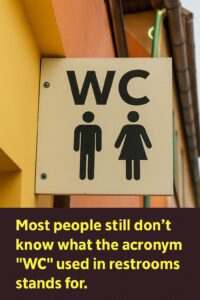
The abbreviation WC, short for Water Closet, dates back to 19th-century England, when indoor plumbing was considered a luxury. At the time, the term helped distinguish the new indoor flushing toilets from the traditional outdoor privies that most households still used. Although the full phrase faded from everyday speech long ago, the initials have endured across generations. Today, travelers still spot “WC” in airports, train stations, and public buildings around the world because the abbreviation remains quick, neutral, and universally recognizable.
As indoor bathrooms became commonplace, different countries developed their own preferred terminology. Americans adopted “restroom,” Canadians leaned toward “washroom,” and the British used “toilet” or “loo.” In the Philippines, “CR” — short for Comfort Room — became the standard, while French-speaking regions favored “toilettes.” With so many cultural variations, global signage needed something consistent, which is part of why “WC” maintained its international presence.
To help bridge language barriers, designers introduced the familiar minimalist icons: a stick figure in pants and another in a skirt. These simple visuals allowed people from any country to identify a restroom instantly, especially in busy places like malls, hotels, and transportation hubs. Over time, businesses began adding creative interpretations — animals, humorous graphics, even themed characters — giving establishments a chance to show personality. While entertaining, these playful signs sometimes leave visitors hesitating at the door.
Modern restroom signage continues to evolve. Many public spaces now include gender-neutral or all-gender facilities, using straightforward text or inclusive symbols to ensure clarity for everyone. These updates reflect a growing effort to make public spaces more accessible and welcoming. So the next time you see a WC sign, remember: it’s not just a label. It’s a small piece of global history, design evolution, and cultural adaptation that has quietly guided people for more than a century.