As cable bills climb higher and streaming services quietly add new fees, many households are rediscovering a simple truth that once defined television: a surprising amount of content is still broadcast for free. Long before subscriptions, passwords, and monthly charges, local stations sent their signals straight through the air, available to anyone with the right equipment. That system never disappeared. It simply faded into the background as technology raced ahead.
What many people don’t realize is that over-the-air television remains fully active and completely legal. Local news, public broadcasting, weather, emergency alerts, and even major national networks still transmit signals that can be received without paying a cent. The only thing required is a compatible digital antenna. And contrary to popular belief, that antenna does not need to be expensive or store-bought.
With a basic understanding of how broadcast signals work and a few common materials, it’s possible to build a simple indoor antenna at home. This is not a loophole, a hack, or a way to bypass paid services. It’s a legitimate method of receiving publicly available broadcasts that stations are required by law to provide free of charge.
The Federal Communications Commission explicitly allows individuals to receive these broadcasts using any compatible antenna, including homemade ones. As long as the antenna is used solely to receive free-to-air signals and does not interfere with other communications or attempt to access encrypted or subscription-based content, it falls well within legal and regulatory boundaries.
The renewed interest in do-it-yourself antennas is partly driven by cost, but it’s also about control. Building your own antenna gives you a clearer understanding of what you’re receiving and why. It removes the mystery around “free TV” and replaces it with something tangible and transparent.
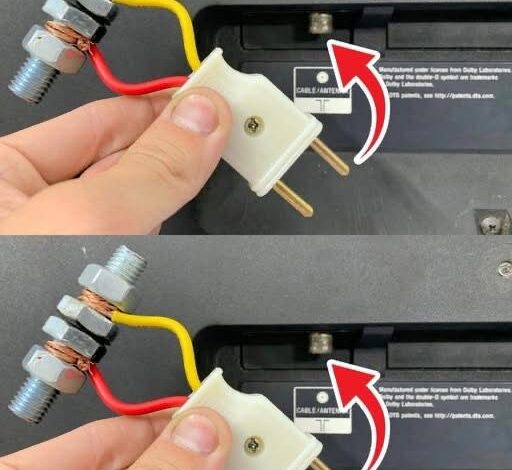
A basic indoor antenna can be constructed with a handful of easily accessible materials. A small wooden board serves as a base to hold everything steady. Several long metal screws act as the signal-receiving elements. A coaxial cable connects the antenna to your television, carrying the captured signal for decoding. Basic tools like a screwdriver, pliers, and tape or adhesive are used to assemble and secure the components.
The screws are arranged in a specific pattern, spaced evenly so they function as receiving arms for different signal wavelengths. The exposed wire from the coaxial cable is wrapped or fastened securely to the screws, allowing the metal to conduct the incoming signal into the cable. The other end of the cable plugs directly into the television’s antenna input.
Once assembled, the antenna is placed near a window or higher location inside the home, ideally facing the direction of local broadcast towers. Televisions are then set to scan for channels, a built-in function that detects available over-the-air broadcasts. In many areas, this can result in access to dozens of channels, including local affiliates of major networks, public broadcasting stations, and regional programming.
Results vary based on geography, distance from towers, building materials, and interference, but many users are surprised by how effective even simple designs can be. Some experiment with minor adjustments, such as repositioning the antenna, altering screw spacing, or adding reflective materials like aluminum foil behind the setup to enhance signal directionality. These tweaks are optional and purely experimental, allowing users to fine-tune reception based on their environment.
What’s important to understand is that this approach doesn’t replace streaming services entirely, nor does it attempt to. It fills a specific gap: access to live, local, free content that people often assume is locked behind paywalls. Emergency alerts, live sports broadcasts on major networks, local weather coverage, and community programming remain widely available through over-the-air transmission.
There’s also an educational aspect to building your own antenna. It demystifies modern technology by revealing how much of it still relies on fundamental physical principles. In a world dominated by software and subscriptions, interacting directly with hardware can feel surprisingly empowering. It reminds people that not everything valuable requires ongoing payment or corporate mediation.
For households looking to cut costs, supplement existing services, or maintain access to information during internet outages, a DIY antenna offers a practical solution. During severe weather or emergencies, when cable or broadband services fail, over-the-air broadcasts often remain operational. That reliability is one of the reasons governments continue to require stations to maintain free public access.
It’s worth noting that this method is intended for personal, educational, and household use. It is not designed for redistribution, commercial exploitation, or interference with broadcast systems. Responsible use ensures that the system continues to function as intended for everyone.
The resurgence of interest in over-the-air television reflects a broader shift in how people think about media consumption. As costs rise and options fragment, many are reevaluating what they truly need versus what they’ve been conditioned to pay for. Free broadcasts, once taken for granted, are being rediscovered as a reliable, lawful, and often overlooked resource.
Building a simple antenna doesn’t require advanced technical skill, only patience and curiosity. It’s a reminder that sometimes, solutions to modern frustrations aren’t hidden behind secret tricks or complicated workarounds. They’re rooted in systems that have existed all along, quietly doing their job while attention drifted elsewhere.
In an era of endless subscriptions, rediscovering free over-the-air television isn’t about rejecting technology. It’s about using it wisely. And sometimes, all it takes is a few screws, a cable, and the willingness to look beyond the assumption that everything worth watching must come with a monthly bill.